Architecture · Network
Network and isolation
One inbound door per environment, a private network for everything else, and a single controlled exit for model calls.
- One inbound doorA single load balancer per environment
- Private service networkApplications and data stay inside private subnets
- Controlled egressOne auditable path for model and SaaS traffic


Network and isolation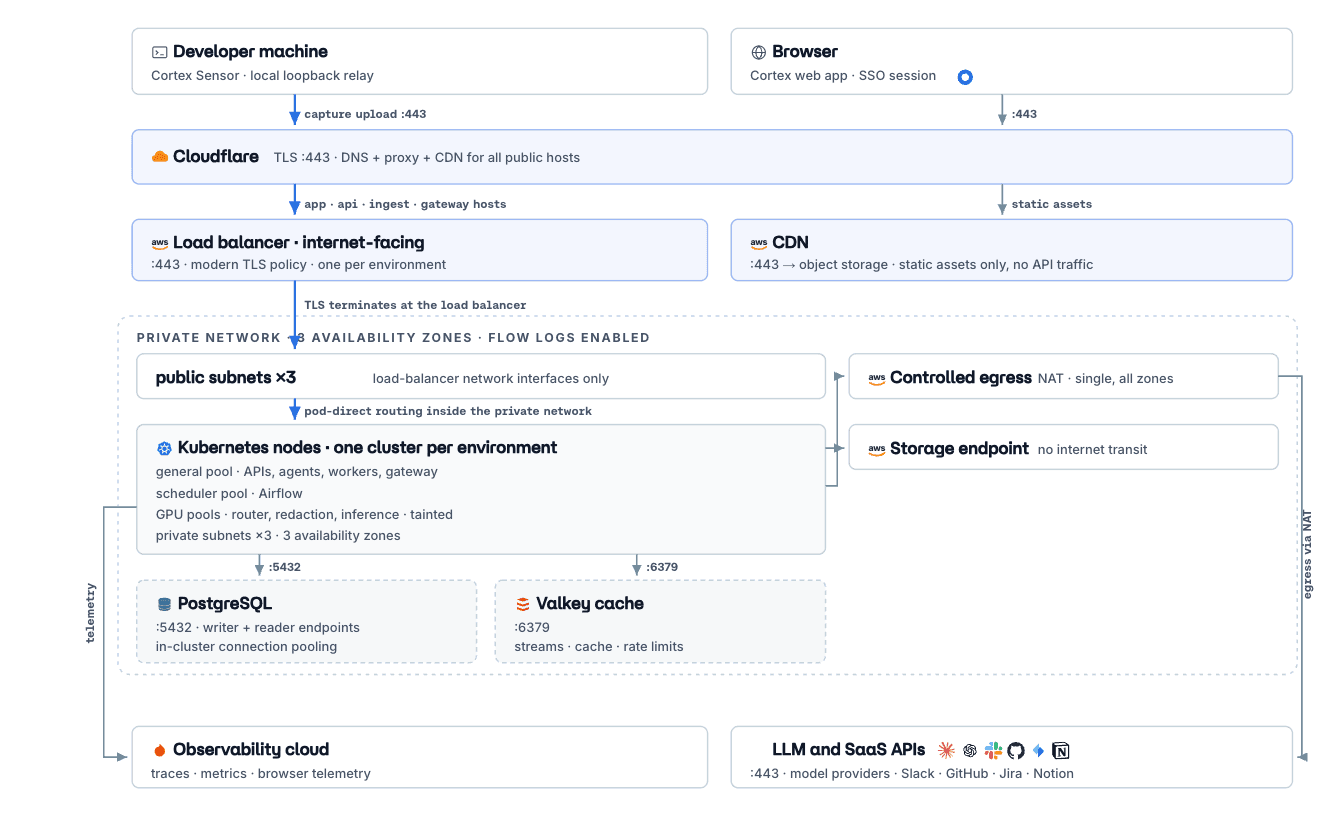
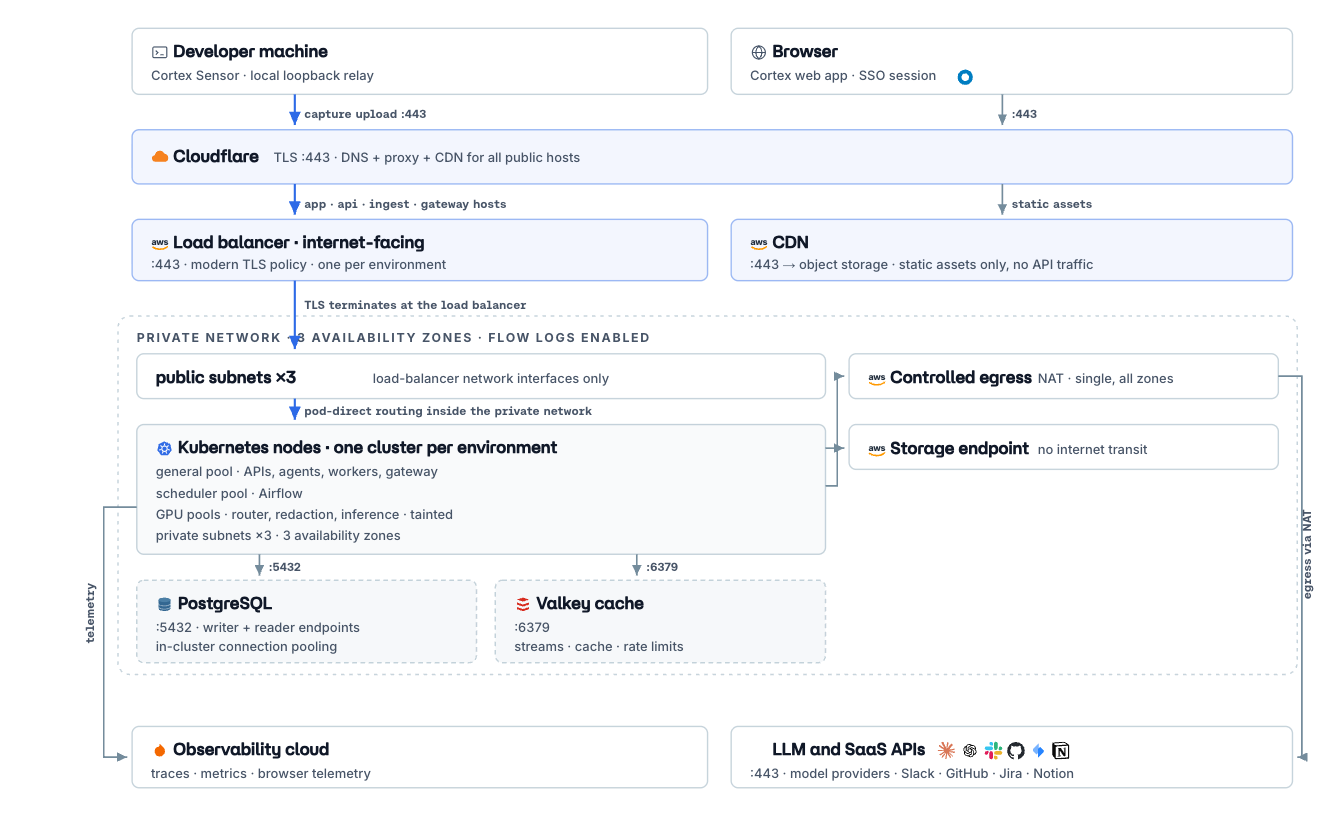
One internet-facing load balancer per environment is the only inbound door. Everything else runs inside a private network and reaches the internet through a single controlled egress.
How traffic gets in
- TLS is terminated at the edge for all public hosts, then again at the environment's load balancer.
- The load balancer is the only internet-facing component. Web app assets are served separately from the CDN and carry no API traffic.
How traffic moves inside
- All services run on cluster nodes in private subnets across three availability zones.
- The data tier — PostgreSQL and the Valkey cache — is reachable only from inside the private network.
- An optional PII redaction stage sits in front of model calls. It fails closed: if redaction is unavailable, the call does not proceed.
How traffic gets out
- All LLM and SaaS calls — model providers, Slack, GitHub, Jira, Notion — leave through a single controlled egress.
- Model calls specifically leave through the Model Gateway, one auditable exit for all model traffic.
- Object storage is reached over a private endpoint with no internet transit.
Environment isolation
Production and staging are fully mirrored and fully independent: separate clusters, separate databases, separate caches, and no shared datastore between them.
Was this helpful?